
How Omega-3 Fatty Acids Support Brain Health and Emotional Balance
If you have ever tried to improve your focus, mood, or mental clarity, chances are you have come across omega-3 fatty acids. People mention them often. They are called “brain food”, “essential fats”, or even “natural mood support.” But what does that really mean in your daily life?
Most people don’t feel a sudden shift after eating fish once or taking a supplement for a few days. That can make it confusing. You may wonder if it’s actually doing anything at all.
The truth is simple. Omega-3 fatty acids work quietly. They support your brain in the background, helping it function more smoothly over time. Not instantly. Not dramatically. But in a steady, reliable way that builds real change.
Quick Answer
Omega-3 fatty acids support brain health and emotional balance by strengthening brain cell membranes, improving communication between neurons, and helping regulate inflammation. Over time, this leads to clearer thinking, better focus, and more stable emotions.
A Real-Life Starting Point
A woman once explained her experience in a way that feels familiar to many people. She wasn’t deeply sad. She wasn’t overwhelmed with anxiety. But something felt off.
“I don’t feel like myself.”
She had energy, but no drive. She could focus, but only briefly. Her emotions felt flat, like life had lost some of its color.
Instead of searching for something complicated, we focused on small daily changes. One of the most important was improving her intake of omega-3-rich foods.
Weeks later, she didn’t describe a dramatic change. Instead, she said:
“I feel clearer. Lighter. More like myself again.”
That is how omega-3 works. Quiet. Gradual. Real.
Understanding the Brain: Why Fat Matters
Your brain is nearly 60% fat. That alone changes how we should think about nutrition.
Among these fats, DHA plays a major role in building brain cells and keeping them healthy.
- Supports strong and flexible brain cell membranes
- Helps signals move smoothly between cells
- Supports learning, memory, and emotional balance
Think of your brain like a network. When the structure is strong, everything works smoothly. When it weakens, things slow down.
How Omega-3 Improves Brain Communication
Every thought you have depends on communication between brain cells. These signals must move quickly and clearly.
Omega-3 keeps these pathways smooth and efficient. Without enough of it, communication becomes slower.
This can show up as:
- Low focus
- Mental fatigue
- Brain fog
With steady intake, many people notice their thinking becomes clearer and more stable.
The Hidden Role of Inflammation
One of the most important roles of omega-3 is balancing inflammation in the body and brain.
Low-level inflammation is often linked with fatigue, mood swings, and reduced clarity. Omega-3 helps keep this balance in check.
That doesn’t mean it replaces medical care. But it supports your body in a natural way.
Many people worldwide do not get enough omega-3 in their diet, even though it plays a key role in brain health.
What People Notice Over Time
| Area | Before | After Consistency |
|---|---|---|
| Focus | Easily distracted | More stable attention |
| Mood | Emotional ups and downs | Balanced emotions |
| Energy | Low and inconsistent | Clearer mental energy |
| Sleep | Restless | More stable patterns |
Common Mistakes
Many people expect fast results. But the brain doesn’t work that way. It changes slowly.
Another mistake is taking very high doses, hoping for quicker results. That often doesn’t help.
Key Insight: Consistency matters more than quantity.
Simple Daily Routine
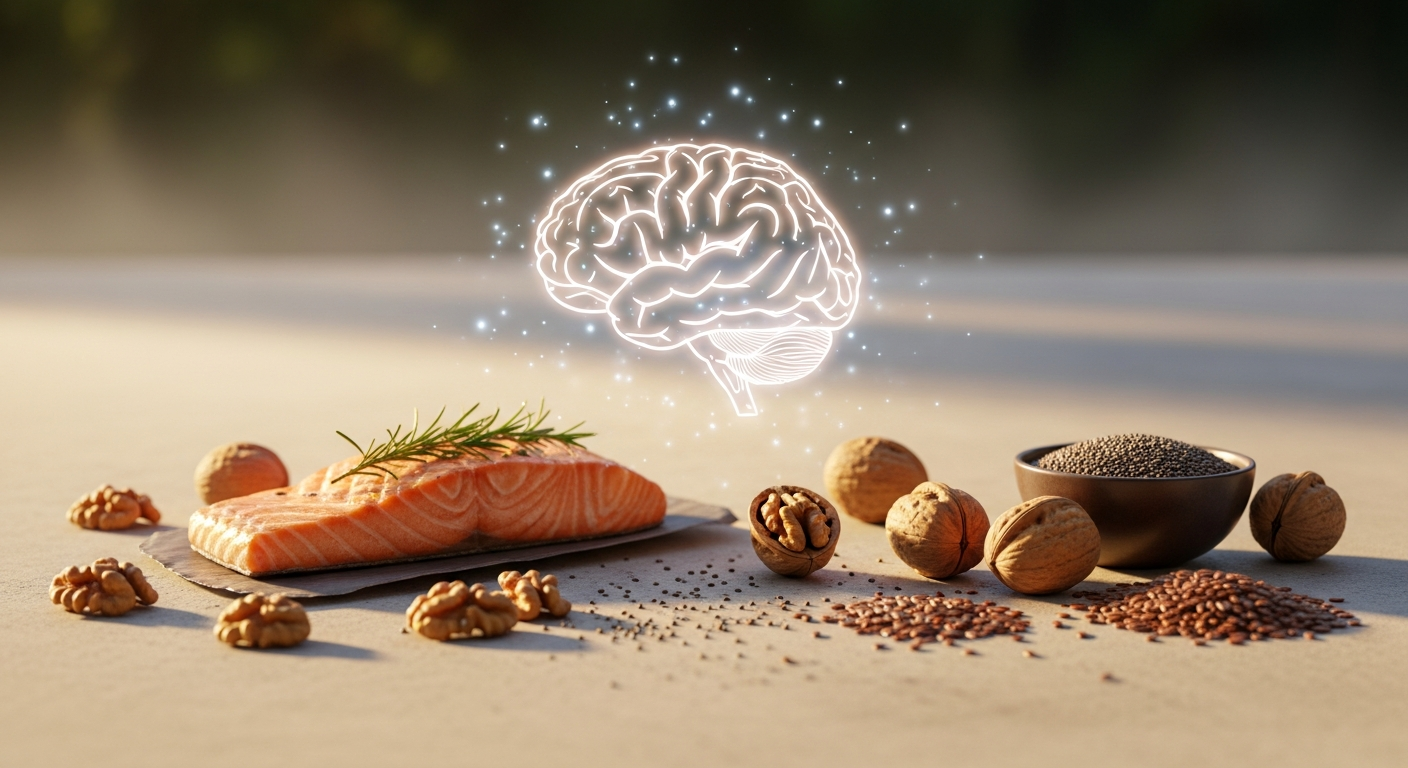
- Morning: Add flaxseed or walnuts
- Lunch: Balanced meal with protein
- Dinner: Fish 2–3 times weekly
- Optional: Supplements if needed
Food vs Supplements
| Factor | Food | Supplements |
|---|---|---|
| Nutrition | Complete | Isolated |
| Safety | Very safe | Depends on quality |
| Benefits | Multiple nutrients | Limited |
Simple Visual Summary
🧠 Brain Structure → Stronger cells
⚡ Communication → Faster signals
🌿 Inflammation → Balanced system
💡 Cognition → Clear thinking
Practical Advice
You don’t need a perfect diet. You need a consistent one.
Start small. Add one omega-3 food daily. Over time, your brain adapts.
Helpful Tips
- Eat fish regularly
- Add seeds and nuts
- Drink enough water
- Reduce processed foods
Risks and Warnings
Omega-3 is safe for most people, but very high doses may increase bleeding risk. Avoid taking large amounts without guidance.
Final Thought
Your brain is shaped by what you do every day. Omega-3 fatty acids are not a quick fix. They are quiet support that builds over time.
If you stay consistent, the results will not feel sudden. They will feel natural
Frequently Asked Questions
How long does it take?
A few weeks to months.
Does it improve mood?
It supports emotional balance over time.
Food or supplements?
Food first, supplements if needed.