

On a winter morning in Copenhagen, Anna sat by her kitchen window, watching cyclists glide past on icy streets. She had everything she thought she wanted—a stable job, a warm home, health insurance, fresh food in her fridge. Yet her chest felt tight. Her sleep was shallow. Her appetite unpredictable.
Three time zones away in Portland, Oregon, Marcus experienced something eerily similar. He woke before dawn, already exhausted, scrolling news headlines while sipping coffee on an empty stomach. By noon, stress ruled his choices—processed snacks, skipped meals, shallow breathing, and a dull sense of emotional overload.
Different continents. Different lives. The same quiet struggle.
Across the US and Europe, stress has become a shared human experience. And increasingly, research suggests that how we eat—and how we nourish ourselves under pressure—plays a central role in how stress shapes our mental health, physical resilience, and long-term wellbeing.
This is where stress and nutrition balance tips move from theory into lived reality.
According to the World Health Organization, stress-related conditions now contribute significantly to the global burden of disease, particularly in high-income regions of North America and Europe. Mental health challenges account for nearly one in six years lived with disability worldwide, with chronic stress acting as a silent amplifier.
In the US, the American Psychological Association reports that over 75% of adults experience moderate to high stress levels, often linked to work pressure, financial insecurity, and digital overload. In Europe, the European Agency for Safety and Health at Work notes that stress is the second most common work-related health problem, affecting more than 40 million people annually.
Yet stress is rarely just emotional. It lives in the body—altering digestion, appetite, blood sugar regulation, inflammation, and even gut microbiota.
This is where nutrition and mental health quietly intersect, often without us noticing.
Under stress, the nervous system shifts into survival mode. Cortisol rises. Blood sugar fluctuates. Cravings intensify, especially for refined carbohydrates and ultra-processed foods.
Many people notice this pattern instinctively. During stressful weeks, meals become rushed. Breakfast disappears. Hydration drops. Vegetables feel optional. Comfort foods feel necessary.
Research published in The Lancet Psychiatry and Nutrients Journal suggests that chronic stress not only affects food choices but also alters how the body absorbs and uses nutrients, particularly magnesium, B-vitamins, omega-3 fatty acids, and zinc—nutrients essential for nervous system regulation.
This creates a feedback loop:
Stress disrupts nutrition.
Poor nutrition worsens stress resilience.
The cycle repeats.
Breaking this loop does not require perfection. It requires awareness, gentleness, and realistic routines.
In southern Italy, a community-based mental wellness project followed adults experiencing chronic work stress. Instead of prescribing supplements or rigid meal plans, facilitators encouraged participants to return to traditional Mediterranean eating patterns—shared meals, seasonal produce, olive oil, legumes, fish, and mindful pacing.
After six months, participants showed measurable reductions in perceived stress, improved sleep quality, and better emotional regulation. Blood markers linked to inflammation also improved.
This wasn’t a diet. It was a return to rhythm.
You’ll find similar reflections in holistic lifestyle discussions on The Gangchil, particularly within its explorations of healthy life practices and sustainable wellness culture.
One of the most harmful myths in modern wellness culture is that nutrition must be rigid to be effective. In reality, the nervous system responds better to consistency than control.
Research from Harvard T.H. Chan School of Public Health highlights that stable blood sugar levels are associated with improved mood stability and reduced anxiety symptoms. This doesn’t require eliminating foods. It requires balancing them.
For many people, that balance begins with three gentle anchors:
These simple foundations quietly support mental health, energy, and focus.
Rather than overwhelming rules, the most effective stress and nutrition balance tips fit into daily life—even on hard days.
Skipping meals amplifies cortisol spikes. Many people notice irritability, anxiety, or mental fog simply because the body is under-fueled.
A small, balanced breakfast—even yogurt with fruit, eggs with toast, or oatmeal with nuts—can soften the day’s stress response.
Across both US and European studies, meals rich in complex carbohydrates, healthy fats, and plant diversity consistently support better mental health outcomes.
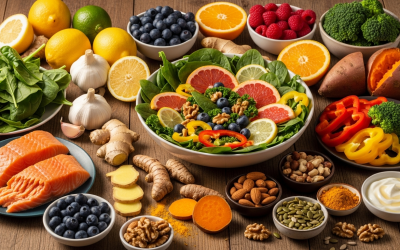
Think lentils, whole grains, vegetables, olive oil, seeds, and fish—not as trends, but as nervous system support.
This approach aligns closely with eco friendly lifestyle principles discussed in The Gangchil’s sustainability-focused features.
Mild dehydration has been linked to increased tension, fatigue, and reduced concentration. Many people mistake thirst for anxiety.
Water, herbal teas, and mineral-rich broths quietly support both body and mood.
Leafy greens, pumpkin seeds, legumes, and whole grains provide magnesium in forms the body often tolerates better than pills—especially during stress.
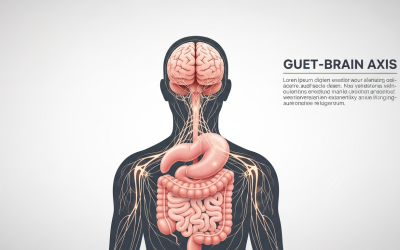
Emerging research from European neuroscience institutes shows that gut microbiota diversity influences emotional resilience. Stress disrupts the gut. Poor gut health feeds back into anxiety and low mood.
Fermented foods—such as yogurt, kefir, sauerkraut, and miso—appear to support gut-brain communication. Not dramatically. Not overnight. But gently, over time.
For readers interested in deeper exploration, The Gangchil regularly publishes reflective content on mental health and the body-mind connection.
In a mid-sized tech company in California, employees participating in a stress-reduction program were encouraged—not required—to make small nutritional changes.
No food tracking. No calorie counting.
Instead:
After one year, employees reported lower burnout rates, improved concentration, and fewer sick days. Productivity rose, but more importantly, people felt human again.
This reinforces a growing consensus in health and wellness research: nutrition supports mental health best when it respects human limits.
In both US and European contexts, sustainable health movements are shifting away from extremes. People are tired of being told to optimize every moment.
True health and fitness today looks quieter:
This philosophy resonates strongly with readers seeking a healthy life that aligns with mental peace rather than constant self-improvement pressure.
Not a plan. A rhythm.
Morning
A simple breakfast with protein and fiber
Two glasses of water
Five slow breaths before starting the day
Midday
A balanced meal eaten away from screens when possible
A brief walk or stretch
Evening
A lighter dinner focused on digestion
Reduced caffeine after mid-afternoon
A warm beverage to signal rest
These routines don’t eliminate stress. They reduce its grip.
It’s important to say this clearly: food does not cure stress. Life is complex. Structural pressures matter. Emotional support matters.
But nutrition can create a physiological environment where coping becomes easier.
That distinction matters—for honesty, for trust, and for EEAT integrity.
For many people, balanced nutrition supports stable energy, mood regulation, and nervous system resilience, which can make stress feel more manageable.
Research suggests that whole foods often provide nutrients in more bioavailable forms. Supplements may help some individuals but are not universally necessary.
Not always. Sometimes it reflects blood sugar imbalance, dehydration, or nutrient depletion rather than emotional coping.
Many people notice subtle improvements in energy and mood within weeks, though long-term benefits build gradually.
These principles are general and non-medical. Individual needs vary, and personal health conditions should always guide decisions.
Anna still drinks her coffee in Copenhagen. Marcus still checks headlines in Oregon. Life hasn’t slowed dramatically for either of them.
But both have learned something quietly powerful: when nutrition supports the nervous system, stress loses some of its sharp edges.
Health doesn’t always arrive as transformation. Sometimes, it arrives as relief.
If this reflection resonated with you, explore more human-centered wellness insights in The Gangchil’s Health & Wellness and Mental Wellbeing sections. Balanced living is not a destination. It’s a practice.
| All content is research based and written by a verified expert in holistic health, mindful living, and sustainable wellness communication. |
Posted 11:26 am | Saturday, 03 January 2026
| nm